Locked down in a port town.
An article about my experience being on field during the COVID - 19 lockdown. Pulished in The Bastion.
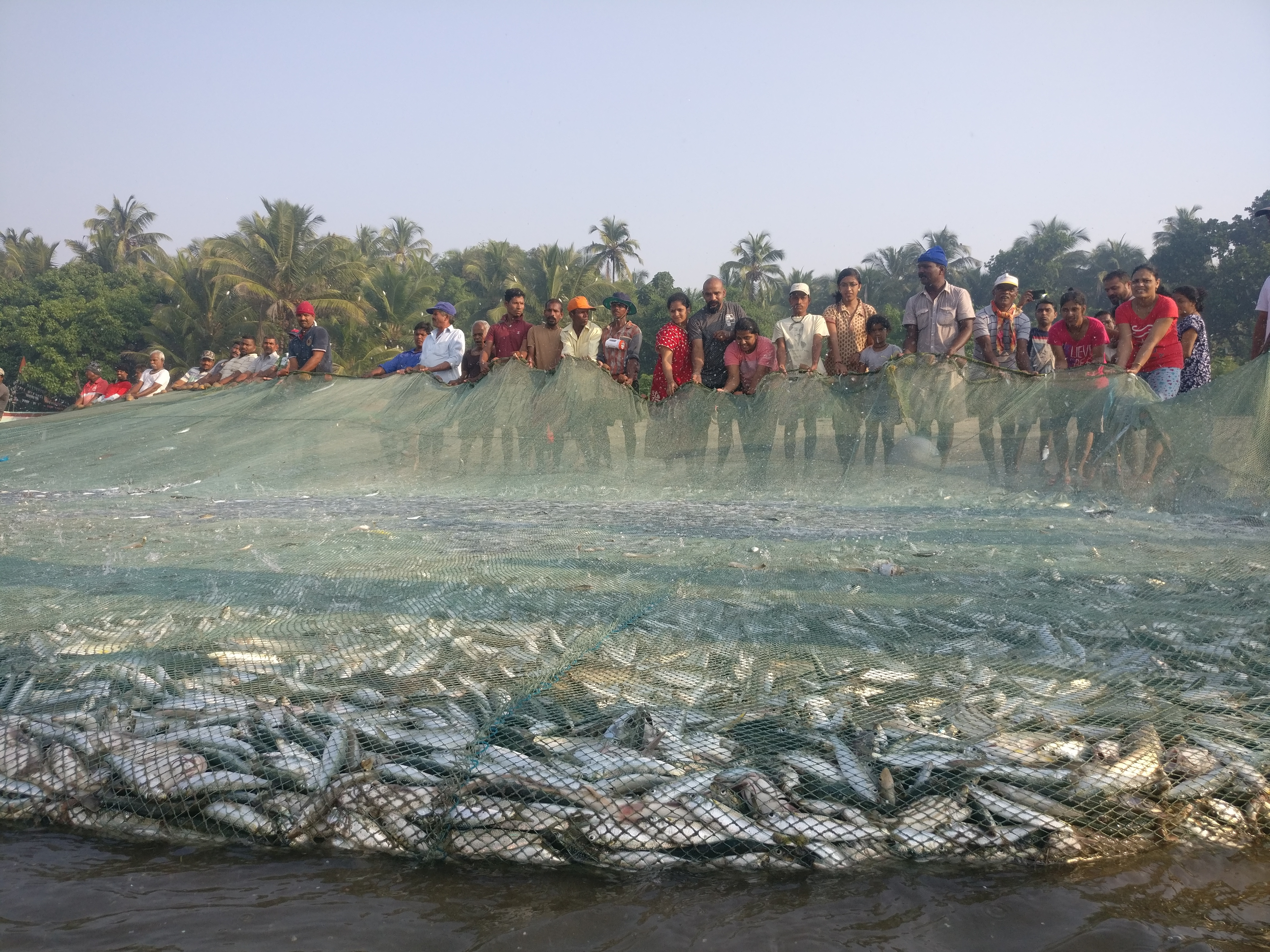
In early March 2020, I travelled to Malvan where, for the past 3 years, I’ve been studying the fisheries in the region. Malvan is a small coastal town in Sindhudurg, the southernmost district of Maharashtra. I had planned to map the fisheries using a collaborative approach with the fishers. I was hoping for interviews and a return to field work after almost a year working in the lab and the office back in Bangalore. It was a much-needed change of pace. However, like the fishers and traders of Malvan, the researchers also did not have a clue of what was to come in the following days and months.
Little seemed to have changed in Malvan. The boats still plied every day, the markets were full of people and the fish auctions still raged on, the crowds a little thinner than I remembered. The tourists were flooding in for the start of the summer and business was good for the local shacks, restaurants and water sports. I was able to get some field work done in the first couple of weeks in March. All the while we were a bit cut off from the news, so when the lockdown did happen as seemed inevitable later, it was a bit of a surprise to all of us at that point.
By mid–march, news of the looming pandemic had become part of everyday conversation. I remember a trawler captain coming up to me at the auction, after 3 days out at sea, and asking me “He coronavirus kay ahe? Amhala kahi hou shakta ka?” (What’s this coronavirus? Will it affect us here in Malvan?) An elderly gentleman, who used to be an auctioneer but is now retired, came up to me and said “Look at this!” handing me his smart phone. On it was a video of how a virus or contagion spreads from one person to another. “This is how it will get us”, he remarked.
The announcements from the local bureaucracy had already started. A small tempo - rickshaw would come around with a loud speaker that blared best practices for keeping yourself protected from the virus – ‘Wash your hands! Don’t touch your face! Avoid crowded places!’. We could hear these announcements in the background as we went about our usual business, completely ignorant of how they would soon be at the forefront of our everyday life. Our friends in the cities started posting stuff about universities closing down, curfews at night and increased police presence, while around us the tourists trickled to a halt and restaurants and tourism businesses shut shop. Suddenly Malvan was much quieter through the day.
Then came the Janata curfew, which was a quiet affair here, at least on Dandi beach. The houses were too far apart to hear the banging of pots and pan, if there was any. Soon after, the Tahsildar and the superintendent of police at Malvan came and met with the auctioneers and fishers present at the evening auction. They announced that the auction was now not feasible given the progression of the pandemic. And as abruptly as that, the auctions stopped. It was difficult to imagine Malvan without the daily auction. But there it was.
The last of the tourists left just before the announcement of the lockdown. The beaches of Malvan, once bustling with activity through the day and even into the night, fell silent. The sounds of boat motors and rickshaws transporting fish could no longer be heard in the mornings. Around 70 medium sized fishing trawlers with crews of 8 – 9 each lay dormant, docked in the natural harbour at Dandi beach. Even the drone of jet skis and the tourists yelling while riding them during the day disappeared.
Reports of tons of fish being thrown overboard due to a lack of demand started flooding in from major ports like Mumbai and Porbandar. Instagram, Facebook and Twitter were flooded with the plight of migrant workers stranded in different parts of the country. In Malvan though, our concerns were more mundane. Supplies started to run low and it was unclear where one could get simple things like rice or medicines. The narrow streets of the town centre were now blocked by police check posts. The atmosphere at the time was one of fear and uncertainty.
The weeks passed and the first lockdown was almost at an end. “We won’t be affected” said a fish trader who I ran into on the beach, with the owner of my favourite chai tapri alongside him. The two were out for a stroll because there wasn’t anything better to do. People would roam the beaches every evening; some would just sit at the periphery of their houses waving at people passing by. On some evenings, a group of local traders and fishers would get together for a match of cricket. The mother of a fisher who was playing cricket said ”The police come every evening at 6 and chase us away, we’ll get fined Rs. 1000 for not wearing a mask”.
The start of the lockdown saw a total curb on all fishing activity. During the second phase of the lockdown, however, restrictions on fishing were lifted, fishers were now allowed to go out but had to market the catch themselves. The beach was vibrant with the bustling of small gillnet boats almost immediately. Fish flooded the market but there was no one to buy. The price of fish had dropped significantly during this time. One could see an army of fisherwomen sitting neatly at a distance of 6 feet from each other at market all the while watched over by an army of police, lest one got too close to the other.
Towards the end of the second lockdown people started getting a bit bolder about leaving their houses. Sindhudurg was declared a green zone with only 1 case being reported since the disease had been declared a pandemic. Shops began to open, yet nothing seemed to approach normal. A gillnet fisher told me that most of them were going out to sea twice a day, ‘What else is there to do?’ he remarked. The price of fish had fallen to around Rs 50 per basket. ‘A man needs at least Rs. 300 per day to get by’, he said.
The ice factory behind our field base bustled with activity. At times, a long line of trucks waiting for ice would form. The trawlers had started to ply regularly again. Even the daily fish sale auctions had started in places along the coast like Devgad and Vengurla, and Malvan was soon to follow. An area on the beach designated by the authorities was flattened and lined with ropes in preparation for the auction. Auction agents lined up six feet apart, every one wearing a mask. Malvan, like the rest of India and the world, would slowly inch towards its new normal. Could the scenes of crowded markets with people gathered around large baskets of fish now be a thing of the past? Aggregators and home delivery seem to now be thriving in hubs like Mumbai and Bangalore. The same may soon be the fate of Malvan.
My teammates and I were able to make our way to back home to Mumbai around mid–April. In early June, Cyclone Nisarga caused yet another disruption to what has been a season filled with misfortune for fishers on the west coast of India. Even as things slowly open up in ‘Unlock 1’ or ‘Mission Begin Again’, India’s fishers may find it increasingly difficult to adjust to their new normal.
Enjoy Reading This Article?
Here are some more articles you might like to read next: